I had a small epiphany a few minutes ago. I had just clicked on a review of the new show of work by the painter Rebecca Allan published in White Hot Magazine and written by Raphy Sarkissian. These are the opening sentences from that review:
“In an era dominated by mixed-media installations and immersive experiences, the continued relevance of painting remains a subject of critical discourse. Rebecca Allan’s partially figurative landscapes are a striking example of this, powerfully manifesting Isabelle Graw’s layered and somewhat paradoxical theory of “the love of painting." Graw’s concept centers on the medium’s ability to fascinate viewers—what she terms its perceived ‘vitality.’”
I decided, after reading the first paragraph, to skip down and look at the images of acrylic paintings by Rebecca Allan, which I would call loose, painterly landscapes ranging in subject matter from a riotous flower garden to a sun-washed desert mesa to a convoluted urban construction site. In each case, I immediately got to the place of fascination, as mentioned in Sarkissian’s review.
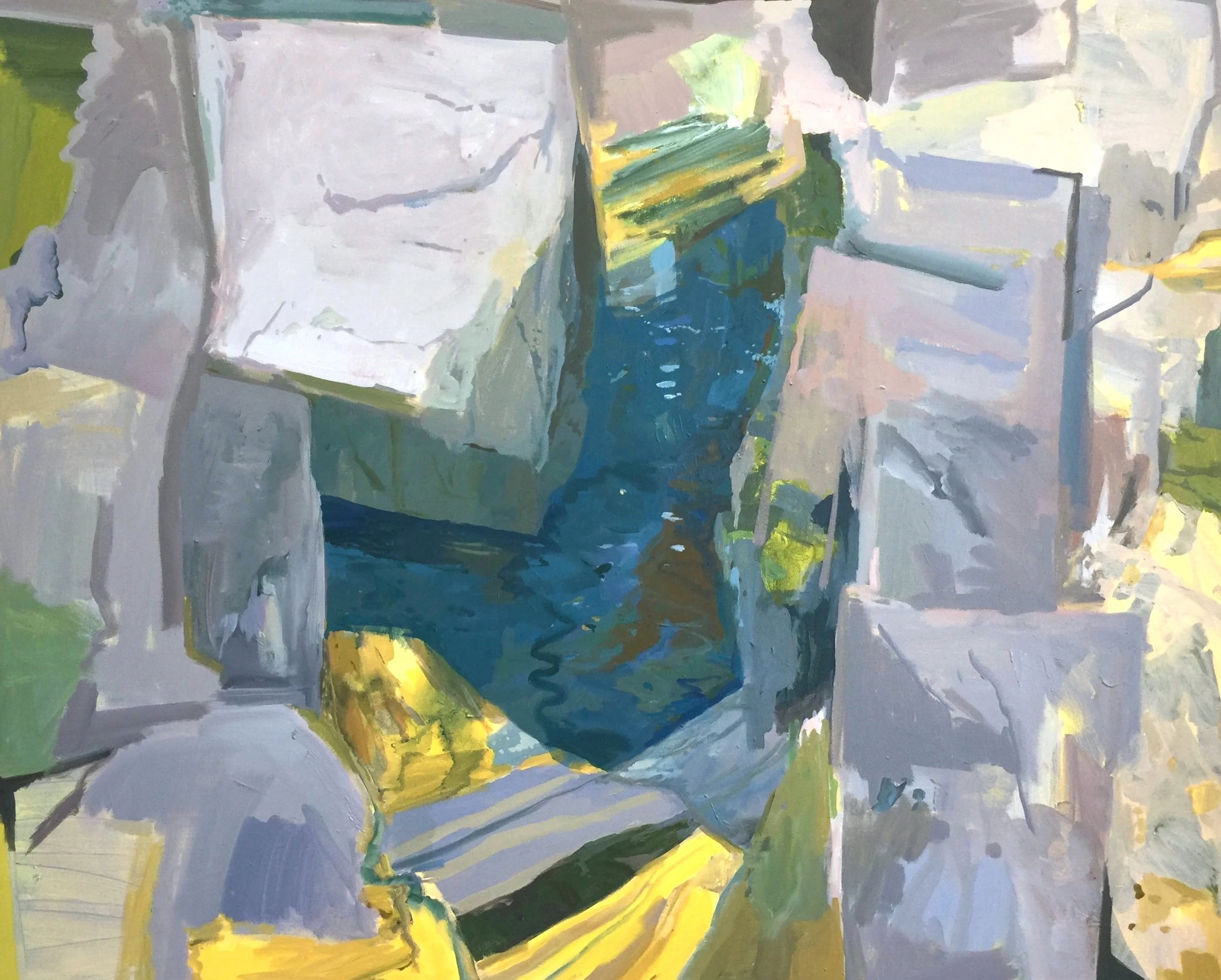
Rebecca Allan, Diver (Booth’s Quarry, Vinalhaven), 2017.
It hit me that this is a very different experience from the “mixed-media installations and immersive experiences” of Sarkissian’s lead sentence. My take is that those latter kinds of experiences do a bit of what our phones and other screens do for us. Our screens consume us. Overwhelm us. Take us out of the world. Obliterate our thinking. (This is substantiated by several studies.)
Not that all installations do that, not by a long shot. However, looking at Allan’s paintings I felt not consumed and taken away, but deeply contemplative with a heightened sense of consciousness and repose. I felt the “vitality” at the heart of Graw’s concept. (The irony of my viewing the paintings on a screen and writing about it for the web does not escape me. Ah, paradox!)
This, I thought, is why we live with art. It’s the thing on our walls in our homes that gives us, at a glance, a moment of contemplation, a pause that quiets the mental busyness in which we spend most of our hours. It’s also a mentally interactive experience. Unlike the way a screen occupies our mind, looking at a painting or a photograph allows thoughts to arise in our heads. It frees up mental space.
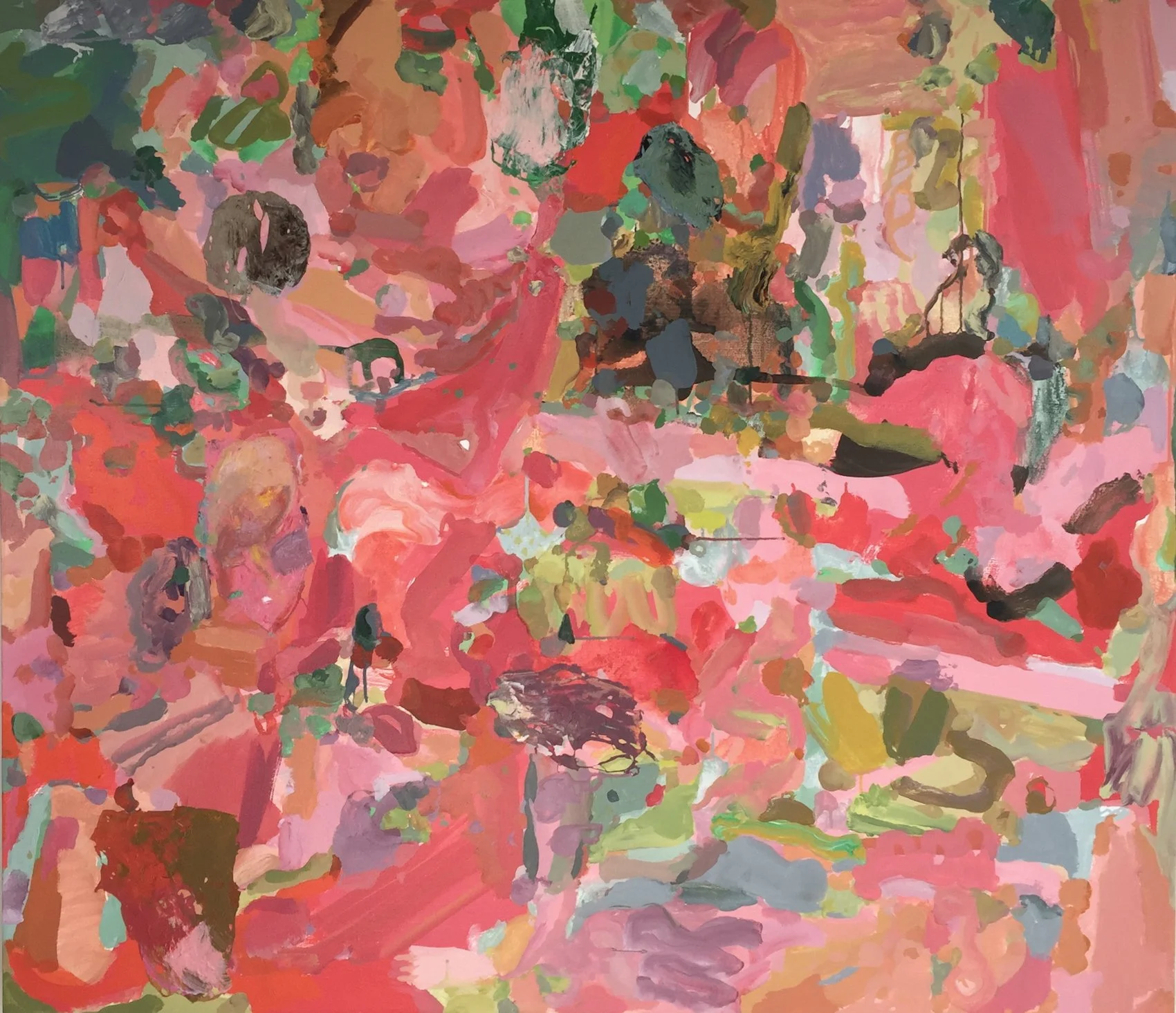
Rebecca Allan, Voltaire’s Garden (Love Letter to Lebanon), 2015.
My wife and I recently downsized to an urban apartment and barely have the wall space to hang our art. That plus living on a fixed retirement income means we’re not buying much art right now. But what we have is constantly feeding me whenever I look up from my tasks.
All this said, it’s fascinating to me that collectively we all have multiple screens, and frequently walk down the street phone in hand and even eyes on phone, and yet I know so many people who do not live with art on their walls. Culturally, we do not have a broad tradition of buying art in this country, with rare exceptions. Most of us did not grow up with art, other than the sparsely scattered decorative piece here or there, never really meant for contemplation. In this way, art is like reading: if we don’t grow up around books and readers, studies show we don’t read much. Unless, of course, it’s on a social media post.
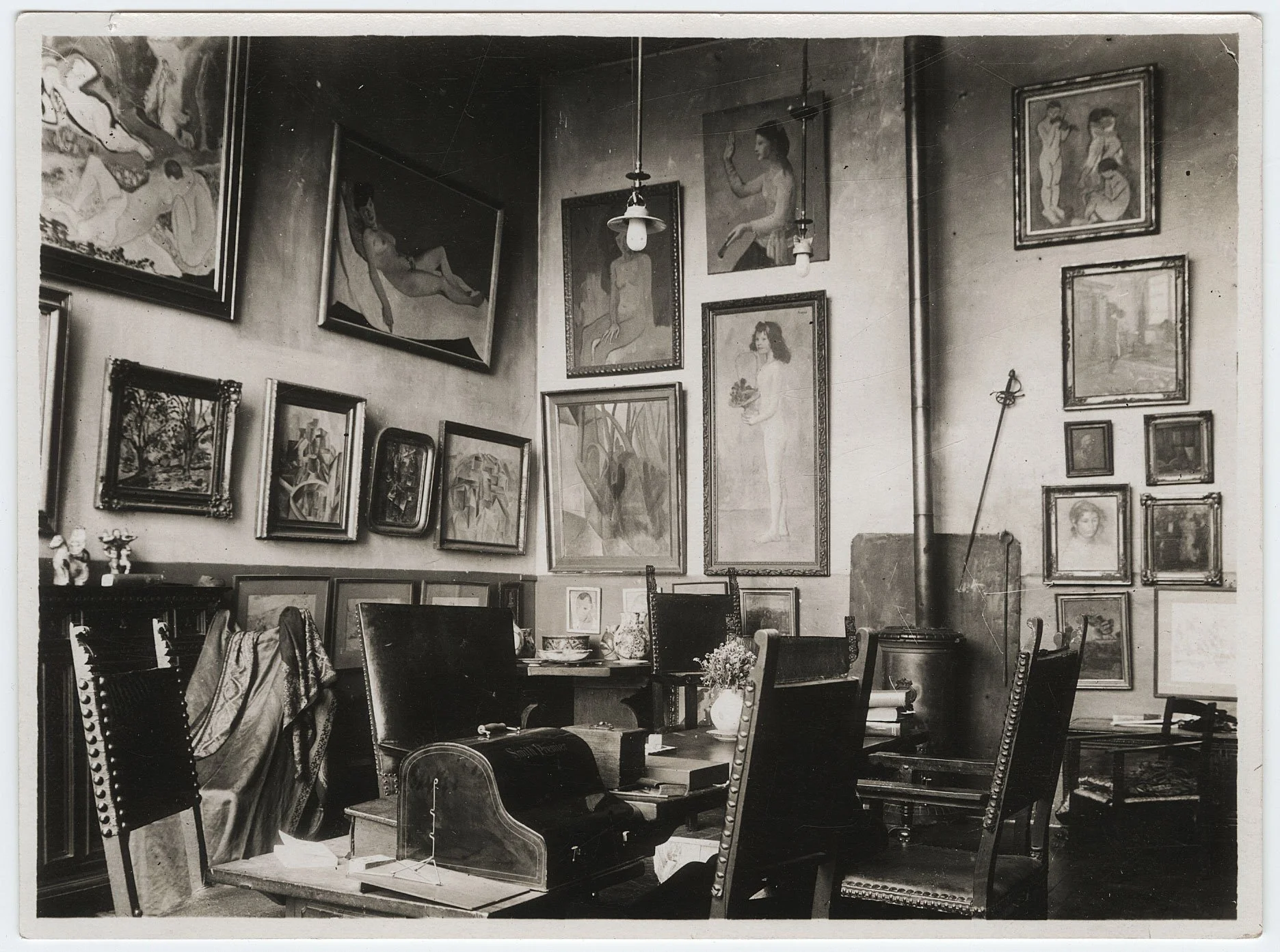
Gertrude Stein somehow always found room for more art. What’s my problem?
I wonder how many of my friends on Instagram, for instance, or the large number of followers of a photographer like Bryan Schutmaat (which is over 60,000 last I time I checked) have photographs on their walls? Or paintings? I don’t have a single friend who wouldn’t profess to love art. Yet how long has it been since they’ve bought art, if ever? It can’t be about money, because they’ll spend $250 for dinner for two without much of a thought. From what I’ve seen, it’s only my friends who are artists or gallerists who buy art.
I’m guessing it’s because no one has ever told most of us, directily, or even indirectly by example, that “you can buy art.” I think it’s something we haven’t been given permission to do.
This is a problem I’ve been wrestling with for a while. How do we get more people to buy art and photographs? Especially here in Portland, where many of the galleries tend to sell to out-of-market collectors, and there isn’t even a bona fide commercial photography gallery in town. How are new photography collectors born when they don’t even have a gallery to visit with a knowledgeable gallerist to guide them? That’s one reason I’m scheming with a local art gallery to start a series of modest photography exhibitions with affordable prints. In the words of Robert Walser, “More on that later.”
All of this matters to our collective health, it turns out. Here’s a quote from a recent Artsy article:
“A growing body of research—including a new systematic review by researchers affiliated with our Lab—shows that even a single session of viewing visual art can significantly enhance wellbeing, reduce stress, and activate pleasure and reward pathways in the brain,” said Dr. Nisha Sajnani, director of arts and health at New York University and co-director of Jameel Arts & Health Lab.
If you have any thoughts on why we don’t tend to buy art, would you mind adding them to the comments section below? I’m sincerely curious.